 | |
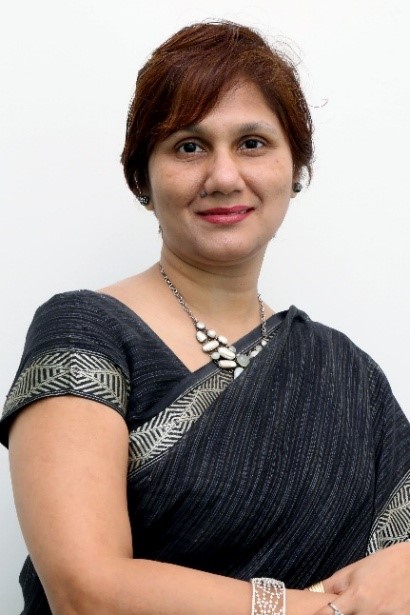
"For business, monitoring and valuing natural assets would enable them to manage potential risks and leverage opportunities associated with the ecosystem services they rely on," says Namita Vikas, Group President & Global Head of Climate Strategy & Responsible Banking at YES BANK.
"Moving beyond GDP would provide immense opportunities for responsible businesses to deliver solutions and contribute towards the global vision of a universal, integrated, and transformative world."
On 9 January, the Green Growth Knowledge Platform, the Green Economy Coalition, and the Partnership for Action on Green Economy (PAGE) convened a High-Level Media Debate broadcast via CNBC Africa on the question, "What Makes a Country Wealthy?" In the lead up to the debate, we asked thought leaders to share their perspective on new approaches to wealth accounting and the challenges and opportunities associated with moving beyond GDP.
Read their insights at the links below:
|
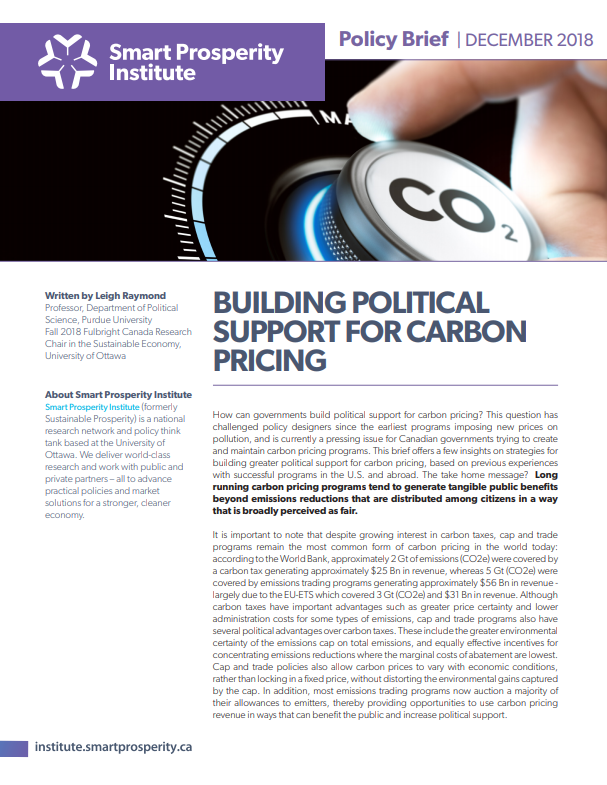
| How can governments build political support for carbon pricing? This policy brief from the Smart Prosperity Institute outlines strategies for building greater support for carbon pricing, based on experience with successful programs in the U.S. and abroad. The take home message? Long running carbon pricing programs tend to generate tangible public benefits beyond emissions reductions that are distributed among citizens in a way that is broadly perceived as fair.
|
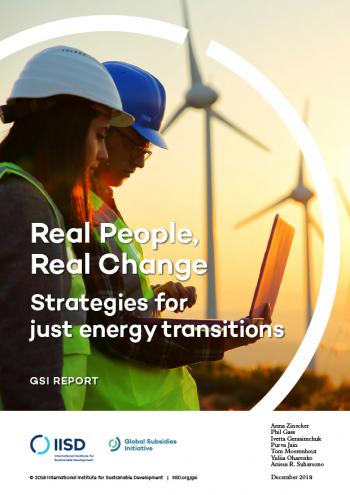
Energy transitions are about people - workers, consumers, businesses, communities, taxpayers and voters - who make decisions that lead to transitions and are ultimately affected by them. Early action on a just transition can minimise negative impacts and maximise positive opportunities. This IISD report aims to support governments of developed and developing countries in their endeavour to make just energy transitions just. It brings together political and communication strategies for a just energy transition, building on research and case studies of energy transitions in Canada, Egypt, Indonesia, India, Poland, and the Ukraine.
|
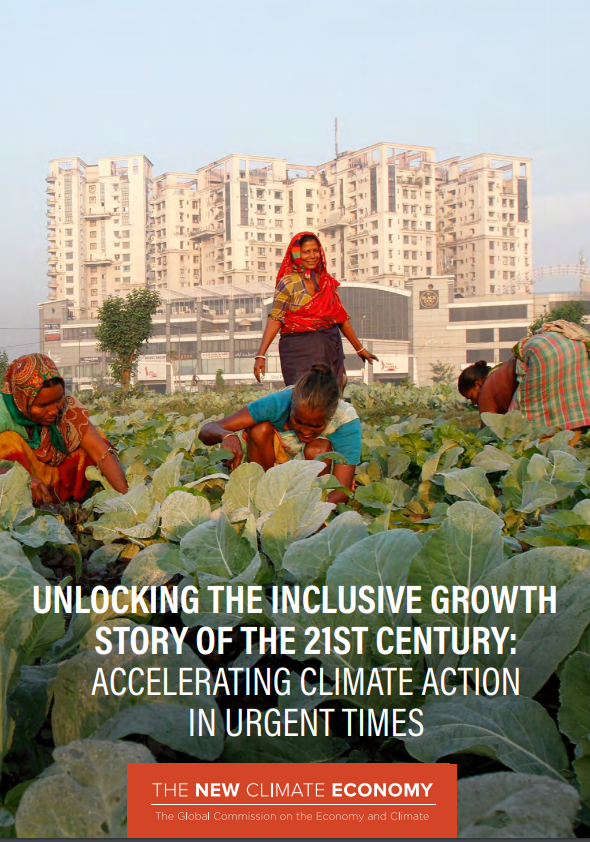
| This report from New Climate Economy sets out the policy and investment priorities for economic growth that is strong, sustainable, balanced, and inclusive that will result in efficient, livable cities; low-carbon, smart and resilient infrastructure; and the restoration of degraded lands while protecting valuable forests. Focusing on five key economic systems - energy, cities, food and land use, water, and industry - the report identifies carbon pricing, accelerating investment in sustainable infrastructure, private-sector engagement for innovation and supply chain transparency, and a people-centered approach, as priority areas.
|
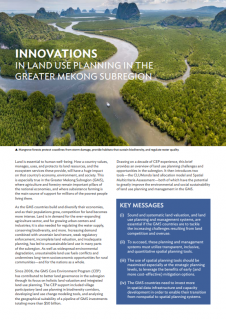
| How a country values, manages, and protects its land-use resources and the ecosystem services they provide will have a huge impact on the country's economy, environment, and society. This brief from the Greater Mekong Subregion (GMS) Core Environment Program provides an overview of land-use challenges and opportunities in the GMS region and introduces two tools that have major potential to improve holistic land valuation and integrated land-use planning.
|
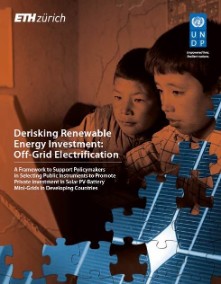
| The UNDP's Derisking Renewable Energy Investment framework helps policymakers to quantitatively compare the impact of different public instruments to promote renewable energy in developing countries. The framework is structured in four stages: (i) risk environment; (ii) public instruments, (iii) levilised cost, and (iv) evaluation. This report expands the framework to private-sector models for solar-battery mini-grids. It sets out a theory of change, introduces key concepts, tools, and methodological steps, and includes two illustrative case studies in India and Kenya. The report demonstrates how targeted derisking measures can result in significant reductions in tariffs and daily energy spending for end-users
|
| About the GGKP
The Green Growth Knowledge Platform (GGKP) is a global community of organisations and experts committed to collaboratively generating, managing, and sharing green growth knowledge. Led by the Global Green Growth Institute (GGGI), the Organisation for Economic Co-operation and Development (OECD), the United Nations Environment Programme (UN Environment), the United Nations Industrial Development Organization (UNIDO), and the World Bank Group, the GGKP now draws together 60 partners organisations. |
| | | | |


No hay comentarios.:
Publicar un comentario